
Table of Contents
Whose death is allowed to be a joke? A counsel piece, not a verdict on the joke
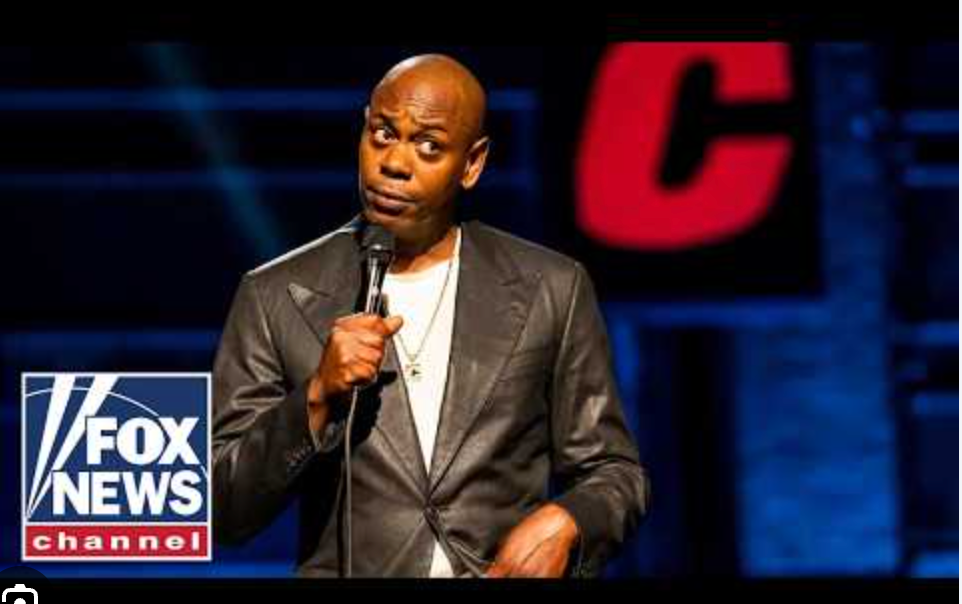
Dave Chappelle didn't write a new joke at Madison Square Garden. He borrowed one, changed one name, and watched the country prove a point in real time.
That doesn't settle whether the joke was right. It does force a harder question, and it's the one we need to sit with before we post, clip, and cancel: Whose death is allowed to be a joke?
Here is what happened. On November 7, during his set at Madison Square Garden, Chappelle joked about Charlie Kirk, the conservative activist who was shot and killed in September 2025 while speaking at Utah Valley University. In one leaked clip, he said Kirk was "looking up at us right now, laughing so hard he can't breathe."
If that line sounds familiar, it should. Six months earlier, at Netflix's Roast of Kevin Hart in May, Tony Hinchcliffe told almost the exact same joke about George Floyd — Floyd was "looking up at us all, laughing so hard that he can't breathe." Same setup. Same afterlife. Same punchline. One name changed.
Chappelle said later, in a small, phone-free room in Yellow Springs, Ohio, that the swap was deliberate. He wanted to expose a double standard. Whether you believe him or not, look at the reaction and tell me he didn't find something real.
When Hinchcliffe said it about Floyd, a lot of the same voices now calling Chappelle disgusting defended it as roast comedy. Nothing is off limits. Comedy pushes boundaries. People are too sensitive. Kevin Hart himself defended the format, even while calling the joke distasteful. When Chappelle said it about Kirk, those voices found a line. Suddenly a joke about a violent death was not edgy. It was cruel. It was dehumanizing. It was beyond the pale.
Family, that is the mirror. A principle that only shows up when your person is the target is not a principle. It's a jersey.
Now, let's be honest in the other direction too, because counsel has to go both ways. It is not true that nobody objected in May. Floyd's family objected. Civil rights advocates objected. Plenty of Black folks heard "can't breathe" — the words Floyd said while Derek Chauvin's knee was on his neck — turned into a punchline, and felt that wound reopen. Their pain was real then. Erika Kirk's pain is real now. She is a widow with two children who will live with their father's assassination every day. When she says political assassination is not entertainment, she is not doing a bit. She is grieving out loud.
And we should separate the two clips, because they are not the same thing. The "can't breathe" line is the mirror — word for word, name swapped. The other line from that night, where Chappelle said he has felt better since Kirk was murdered, is harder to defend as a test of anybody's consistency. Charlamagne tha God said it plain on The Breakfast Club: he doesn't find humor in people getting shot, and he wouldn't wish that on his worst enemy — even while he respects the right to say it. You can hear that and sit with it. A man who makes his living speaking in public, as Chappelle does, as Kirk did, joking that a public killing lifted his mood will land in people's bodies differently. Naming that is not censorship. It's honesty.
The deaths are not identical, either, and we don't have to pretend they are to learn the lesson. Floyd was a private citizen killed by the police, on camera, begging for air. Kirk was a political figure assassinated for speaking, on camera, in front of students. State violence is not the same as political violence. The histories are different. The grief travels differently.
But different is not the same as disposable. If our compassion has a party registration, we have already lost the thing we claim to be defending.
Here in Ohio, this is not abstract. Chappelle is ours — he lives in Yellow Springs, he explained himself in a firehouse room with no phones and no clips, just a man talking to neighbors. And here in Columbus and Franklin County, we know both kinds of rooms: the room where a family plans a funeral the cameras will cover, and the room where a family grieves one the cameras moved on from. We sit in those rooms with people we voted against. We pass the tissues anyway. That is what community actually requires.
So here is the counsel, and it's simple enough to use the next time — because there will be a next time. Before you share the clip, before you demand the cancellation or rush to the defense, run the swap test. Change the name in the joke to somebody you love, somebody you marched for, somebody whose picture is on your shirt. If your standard changes, it was never your standard. If you laughed in May, don't perform outrage in November. If you were wounded in May, don't perform delight in November.
You do not have to find either joke funny. Free speech protects Chappelle's right to tell it, Hinchcliffe's right to tell it, and your right to say both of them were wrong. What it asks of us — what being a community asks of us — is consistency.
Don't be mad at the mirror for showing you your own face. Decide, ahead of time, what you believe about grief, about comedy, and about the value of a life that isn't on your side. Then hold that line no matter whose name is in the joke.